




Choosing between warm white vs pure white Christmas lights comes down to your home’s architecture — warm white creates a soft, traditional appearance that suits brick, stone and classic architecture, while pure white produces a cooler, crisper effect that often complements modern façades and black or grey finishes. The best choice depends on the home, surrounding landscape and desired mood; consistent colour across connected features matters more than the label alone. Deciding between warm white vs pure white Christmas lights often comes down to the home’s architecture — both can create an elegant display, but the better choice is the one that complements exterior finishes and surrounding landscape rather than fighting them.
What does warm white lighting look like?
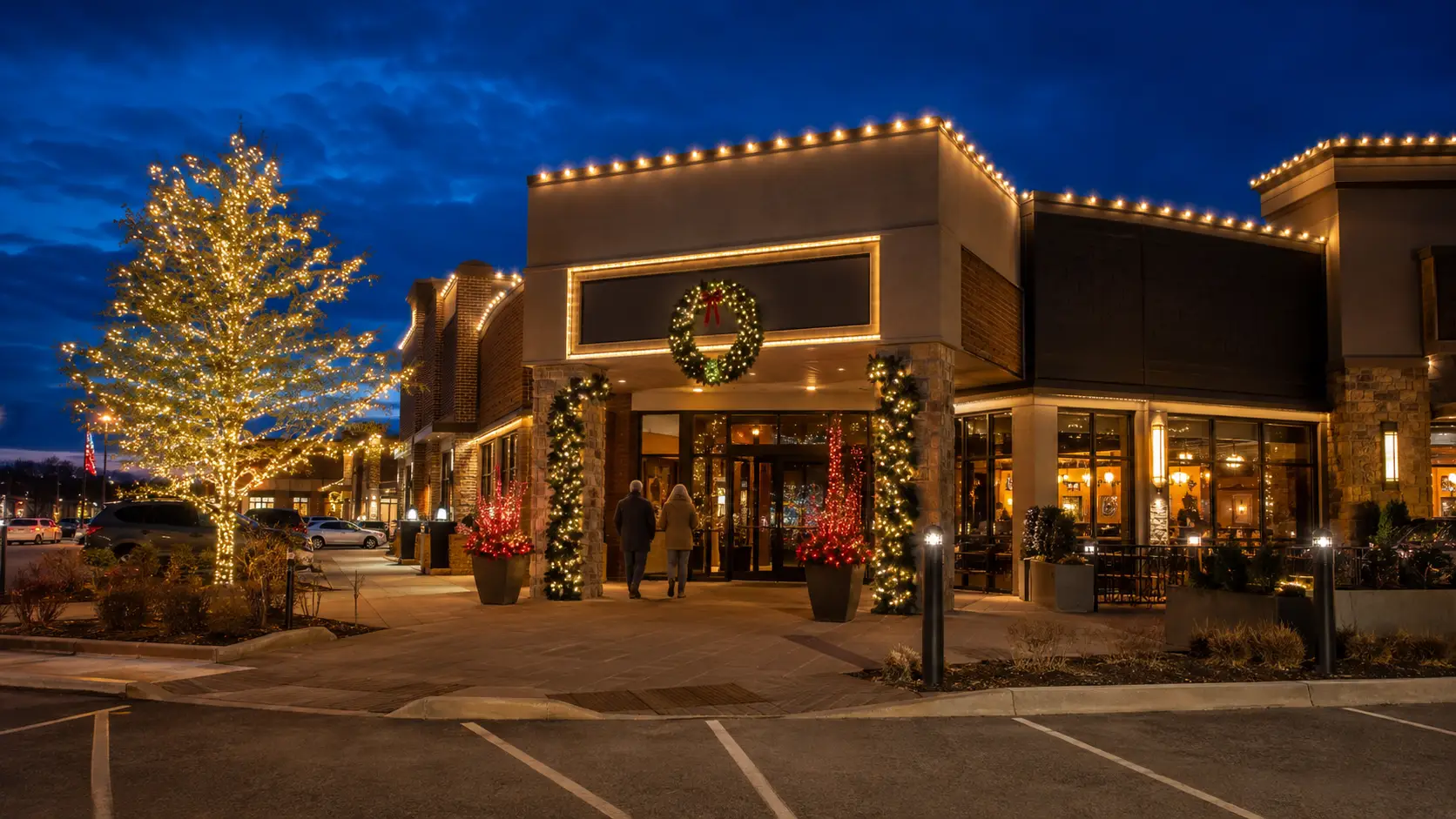
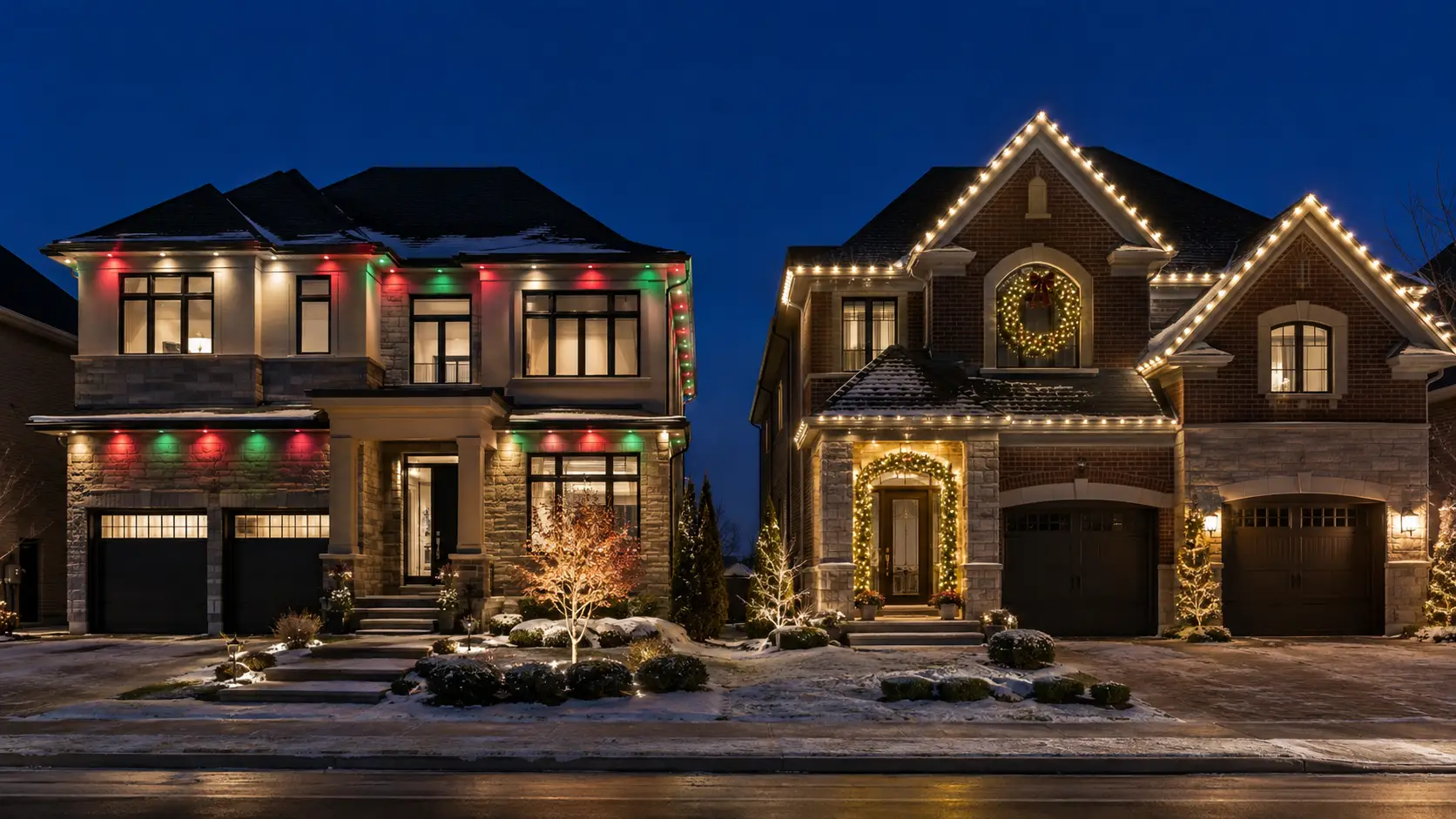
Warm white has a soft, golden character associated with candlelight and traditional holiday décor. It works especially well with red brick, natural stone, cream siding, cedar, copper details and warm interior lighting visible through the windows. It tends to make large homes feel inviting and established.
What does pure white lighting look like?
Pure white appears cleaner and crisper. It can complement modern architecture, cool grey stone, white façades, black trim and contemporary landscaping. On snowy nights, it can create a bright, high-contrast effect that feels fresh and architectural.
Consistency is more important than the label
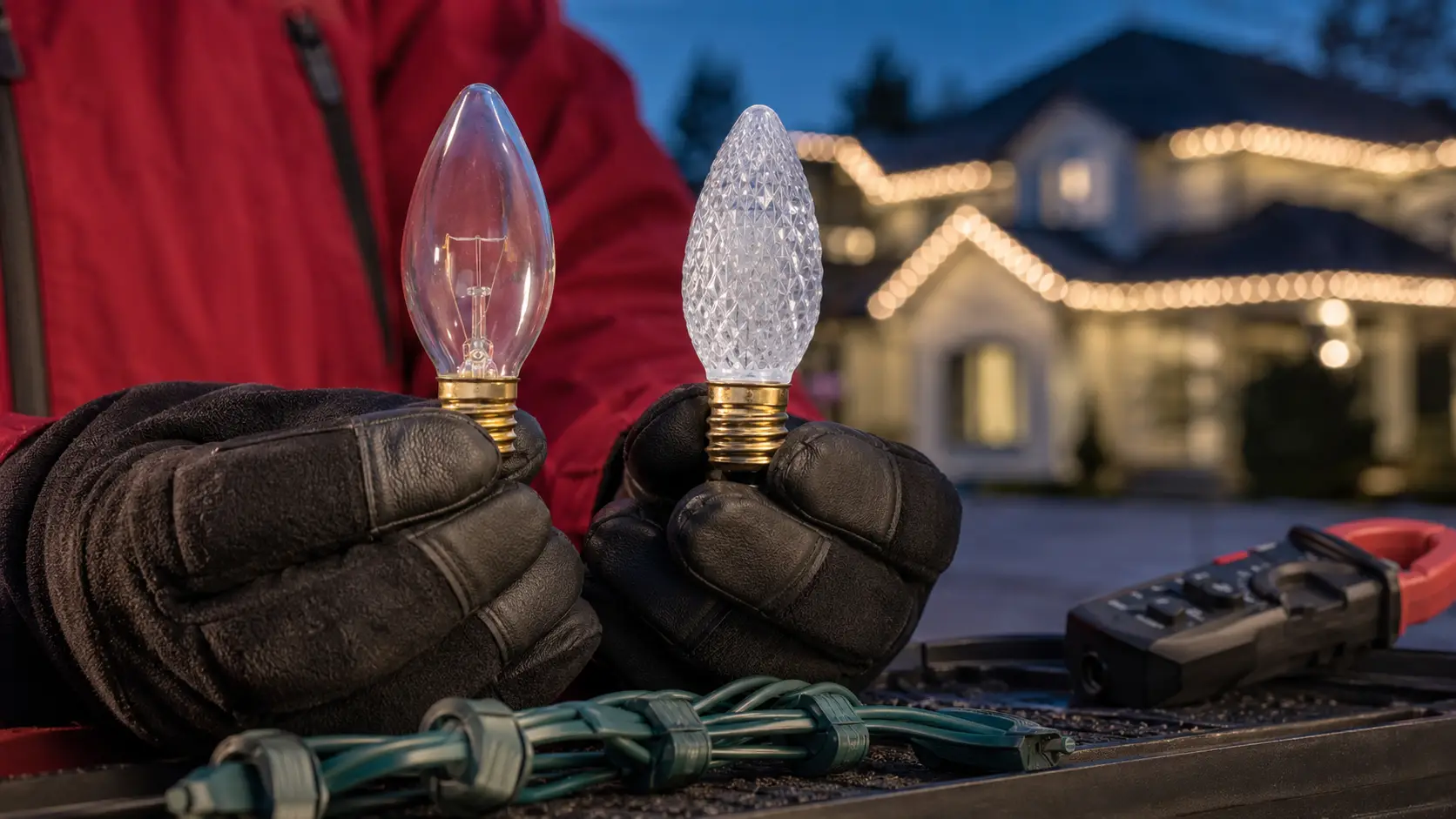
White products from different manufacturers can vary noticeably. Combining several whites may produce an accidental patchwork of yellow, blue and neutral tones. A professional design should use a consistent product family and colour standard across connected features.
Use contrast intentionally
A single white is not the only sophisticated option. Warm white rooflines can be paired with restrained red accents, while pure white may work with cool blue or carefully selected colour-changing features. The key is to define a hierarchy: one dominant colour, one supporting accent and a limited number of focal points.
Consider what is being illuminated
- Rooflines benefit from a consistent colour that outlines the architecture.
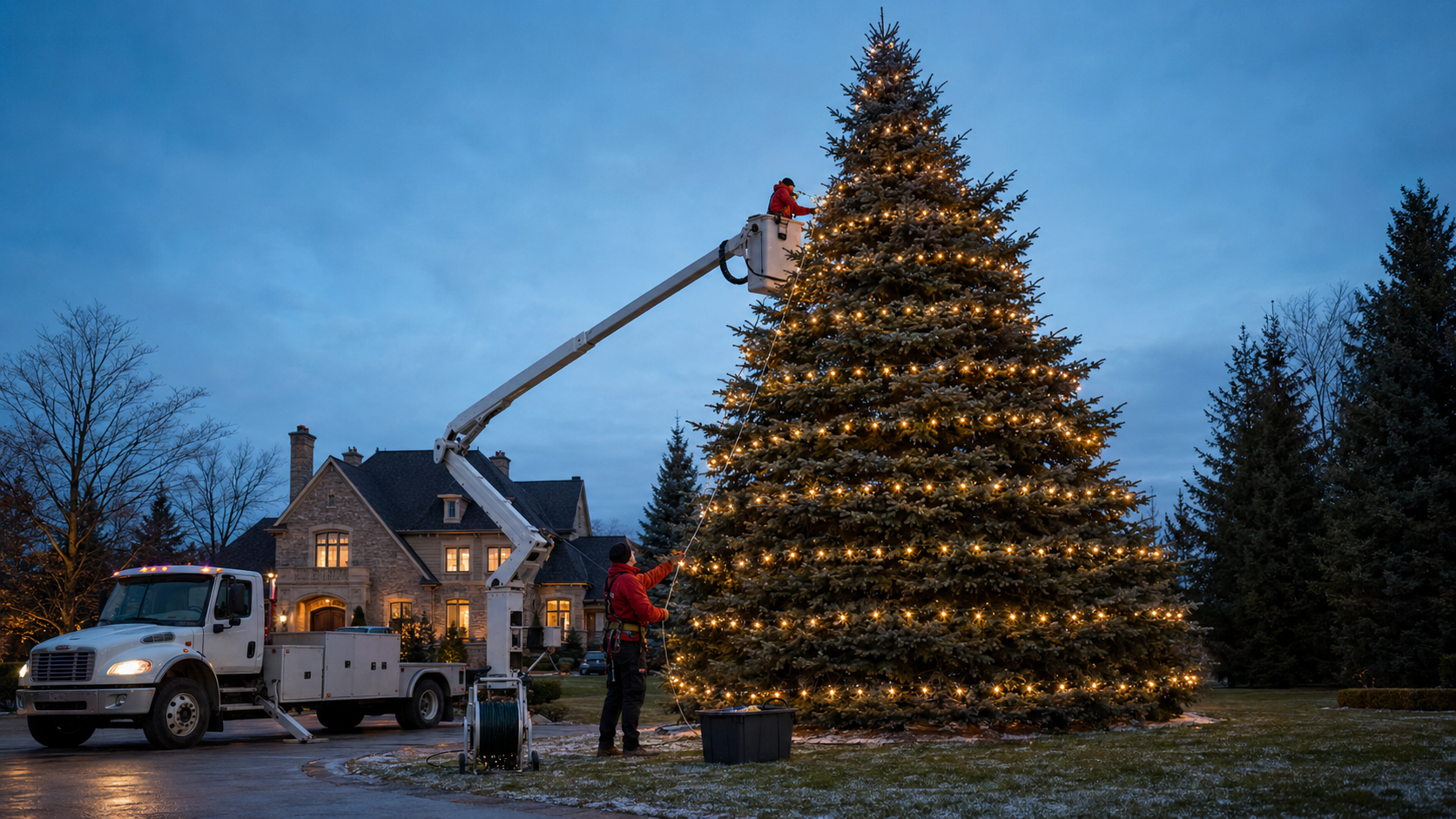
- Evergreens can carry a denser, more dimensional light treatment.
- Wreaths and garland may introduce texture, bows and warmer decorative elements.
- Permanent RGB systems offer flexibility, but the everyday white quality should still be evaluated.
View real samples when possible
Screens and photographs alter colour. If you are making a significant investment, ask to see actual bulbs illuminated or review completed projects photographed in conditions similar to your home. Exterior paint, ambient street lighting and snow cover can all change perception.
Warm White vs Pure White Christmas Lights: Our Design Recommendation
Choose the colour that makes the property look intentional even before anyone notices the individual bulbs. For many traditional homes in York and Durham Regions, warm white creates timeless elegance. For sharply modern properties, pure white can reinforce the architecture. Neither is universally better. Next step: Not sure which white belongs on your home? Illuminations Lighting Inc. can recommend a coordinated palette and show how it will carry across the roofline, greenery and landscape.
Frequently Asked Questions
Which Christmas light colour works best with brick homes?
Warm white tends to suit red brick, natural stone, cream siding, cedar and copper details best, since its soft, golden character complements these warmer exterior tones. Pure white generally reads better against cool grey stone, white façades and black trim.
Can warm white and pure white lights be mixed on the same house?
Mixing whites from different manufacturers can create an accidental patchwork of yellow, blue and neutral tones. A professional design typically uses one consistent product family and colour standard, with contrast added intentionally through accent colours rather than mismatched whites.