




LED vs incandescent Christmas lights comes down to a few key differences — LED generally uses less electricity, runs cooler, lasts longer and supports larger professional displays, while incandescent offers a familiar glow but consumes more power and requires more load planning. Product quality, colour consistency, outdoor certification and serviceability still matter; choosing LED alone does not guarantee a reliable or attractive installation.
LED vs Incandescent Christmas Lights: At a Glance
| LED | Incandescent |
|---|---|
| Lower energy use | Higher energy use |
| Runs cooler | Produces more heat |
| Long service life | More frequent replacement |
| Efficient for larger displays | Familiar traditional glow |
LED lighting has become the standard choice for many professional Christmas displays, but the decision involves more than electricity use. Colour consistency, dimming behaviour, product quality, socket construction and serviceability all affect the final result.
Energy and electrical capacity
LEDs use less electricity than traditional incandescent bulbs, allowing more lighting to operate within available electrical capacity. Natural Resources Canada identifies LED lighting as an energy-saving technology that has helped reduce household lighting energy use. A lower load does not eliminate the need for proper circuit planning, outdoor-rated equipment and GFCI protection.
Heat and operation
LED bulbs generally operate cooler than incandescent bulbs because less energy is converted to heat. That can be advantageous for seasonal displays, but every electrical product and connection still needs to be approved for its intended use and kept in good condition.
Colour quality
Early LEDs sometimes produced harsh or inconsistent white light. Better products now offer warm, pure and other calibrated whites, but colour still varies among brands and manufacturing batches. A professional display should use compatible products so rooflines and landscape features do not appear mismatched.
Durability and serviceability
LED lamps can provide long operating life, but a lighting system is only as reliable as its sockets, wire, rectifiers, connections and installation. Commercial-grade construction and a responsive service program are more meaningful than a bulb-life claim by itself.
The appearance of classic bulbs
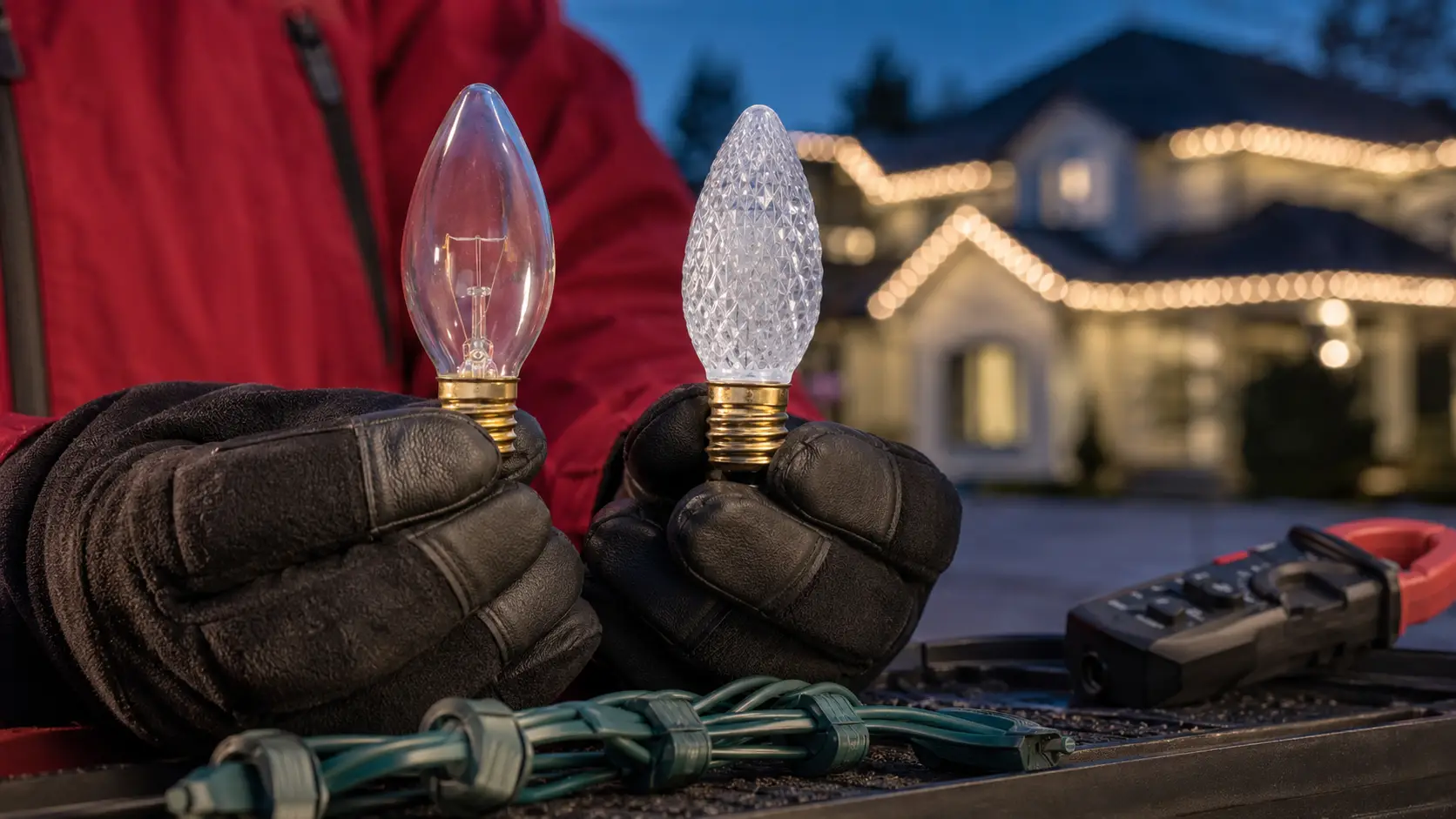
Choosing LED does not require giving up the familiar C9 roofline look. Professional LED retrofit bulbs can provide the shape, spacing and strong visual rhythm associated with traditional Christmas lighting while reducing electrical demand.
Avoid judging by purchase price alone
Retail strings may appear inexpensive, but replacement frequency, colour matching, installation time and service affect lifetime value. For a professionally managed display, consistent product and reliable support are often more important than the initial bulb price.
Our practical recommendation
For most new professional exterior displays, quality LED product is the sensible starting point. It supports larger designs, colour choice and efficient operation. The installation should still be planned around the property’s actual circuits and reviewed whenever tripping, damaged cords or questionable receptacles are present. Next step: Still deciding on LED vs incandescent Christmas lights for your property? Illuminations Lighting Inc. uses professional lighting systems selected for Canadian outdoor conditions and a clean custom appearance. Contact us to discuss the right product and design for your property.
Frequently Asked Questions
Can I mix LED and incandescent on the same property?
Technically yes, but it is not usually recommended for a cohesive result. Colour temperature, brightness and dimming behaviour differ enough between the two that mixed sections can look mismatched rather than intentional. A professional display generally sticks to one compatible product family throughout.
Do LEDs look colder than incandescent?
Early LED products sometimes produced a harsh or inconsistent white light compared to the familiar incandescent glow. Better LED products now offer warm, pure and other calibrated white options, so the “cold” appearance is more a product-quality issue than a limitation of LED technology itself.