




Professionally installed christmas lights can reduce common holiday-lighting risks when trained crews use certified outdoor products, GFCI-protected connections, suitable access equipment and weather-aware work practices. While professional installation does not eliminate every risk, Ontario homeowners can protect their property by confirming the installer’s insurance and methods, and using a licensed electrical contractor whenever new receptacles or permanent 120-volt electrical work are required.
Key Safety Considerations for Professionally Installed Christmas Lights
Professionally installed Christmas lights can reduce many common risks, but the word professional is not a safety guarantee by itself. The result depends on product selection, electrical planning, access equipment, installation methods and the company’s willingness to stop when conditions are unsafe.
Outdoor-rated, certified products matter
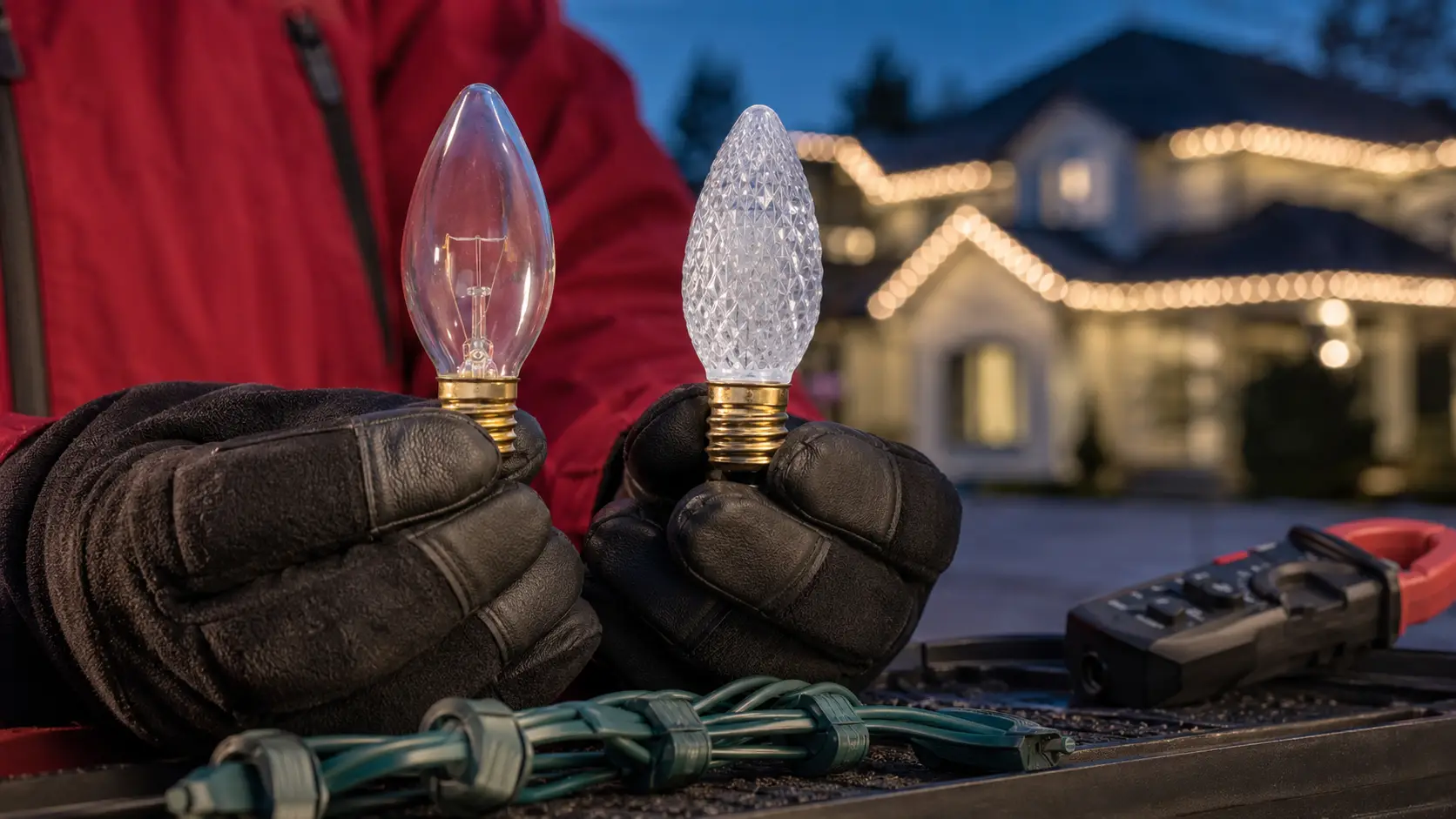
Health Canada advises consumers to look for certification marks showing that electrical products meet Canadian safety standards. Outdoor decorations and extension cords should be approved for outdoor use. Damaged insulation, poor strain relief and unsuitable connections can create shock, burn or fire hazards.
Outdoor connections require thoughtful placement
Ontario’s Electrical Safety Authority recommends GFCI-protected outdoor connections and warns against placing connections in puddles or snow. Connections should be protected from physical damage and positioned to reduce water exposure. Cords should not be pinched through doors or windows, buried under carpets or routed through pedestrian areas where they create a trip hazard.
Circuits should not be overloaded
More lights do not automatically require unsafe electrical loads, particularly with efficient LED products, but every display still needs a plan. Frequent tripping or blown fuses are warning signs, not inconveniences to bypass. A qualified electrician may be required if the project needs new receptacles or changes to a 120-volt supply.
Height and access create separate risks
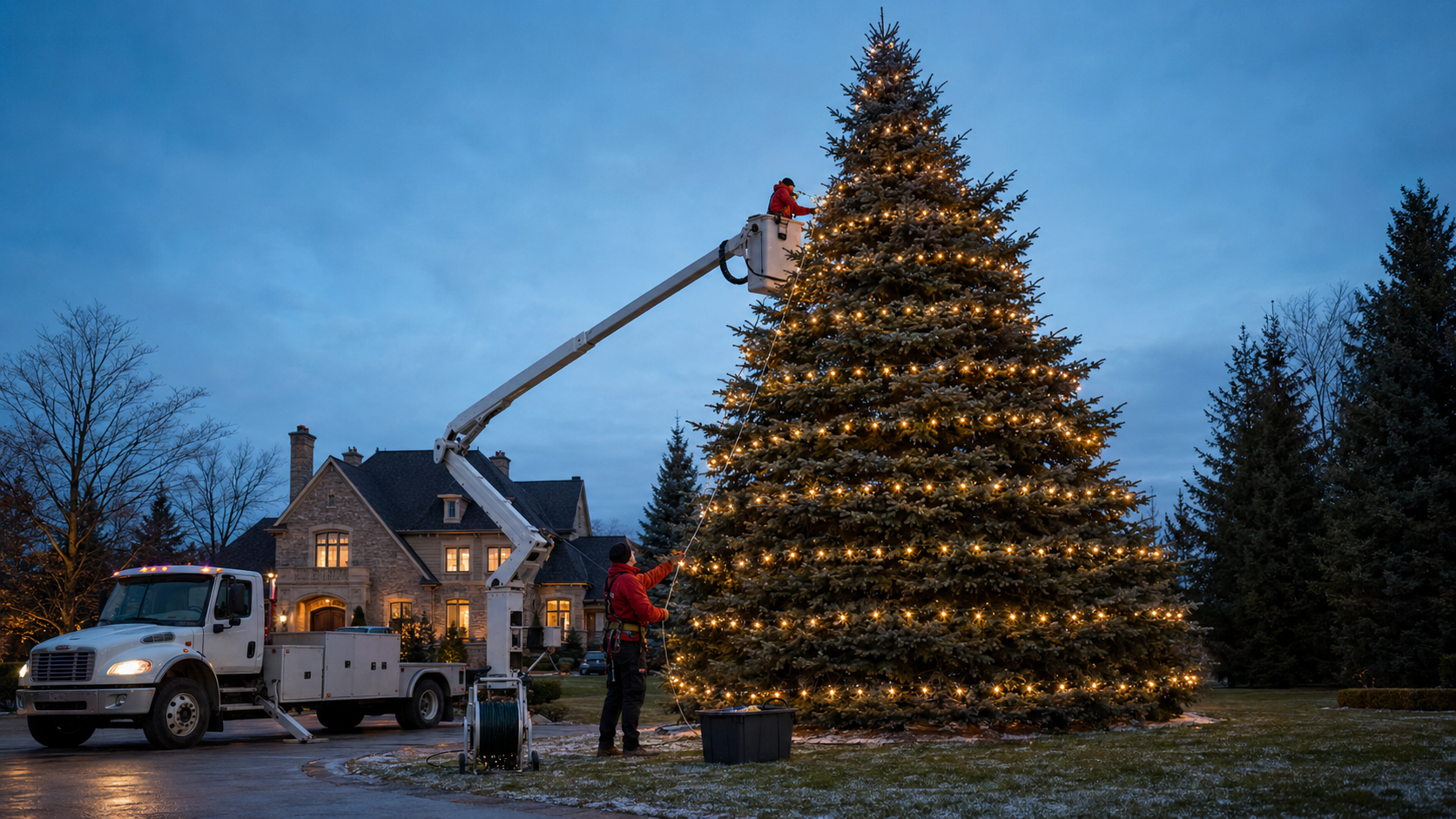
Many holiday-light injuries are access-related rather than caused by the lights themselves. Roof pitch, frost, wind, soft ground and overhead powerlines all affect the safest method. ESA advises keeping ladders, tools and pole extensions at least three metres from overhead powerlines. Professional installers should use suitable ladders, fall-protection practices and lift equipment where required.
Timers support consistent operation
Health Canada recommends turning holiday lights off before leaving home or going to bed. Properly configured timers or controllers make that routine automatic and prevent a display from operating unnecessarily all night.
What a professional company should check
- Whether products and cords are appropriate for outdoor use
- The condition of cords, plugs, sockets and connections
- GFCI protection and available electrical capacity
- Safe routes for cords and power distribution
- Roof, ground, weather and overhead-line conditions
- Secure attachment methods that respect the property
No article can assess the electrical or access conditions at a specific property. If there is uncertainty about a receptacle, circuit or permanent wiring, consult a licensed electrical contractor. Next step: Illuminations LightingInc. plans displays for both appearance and practical seasonal operation. Contact us to discuss a professionally designed installation for your York or Durham Region property. Sources for factual review: Electrical Safety Authority, “Holiday Safety”; Health Canada, “Holiday decoration, apparel and gift safety.”
Frequently Asked Questions
What should I check before hiring someone to climb my roof?
Look for roof, ground, weather and overhead-line conditions being assessed before work begins, along with suitable ladders, fall-protection practices and lift equipment where required. ESA recommends keeping ladders, tools and pole extensions at least three metres from overhead powerlines — confirm the installer follows this.
Are LED lights safer than incandescent?
LED products typically draw less electrical load than older incandescent sets, which reduces the chance of an overloaded circuit — one of the main causes of tripped breakers and blown fuses in holiday displays.